The Immaculate Conception · December 8
Vanillekipferl for the Immaculate Conception
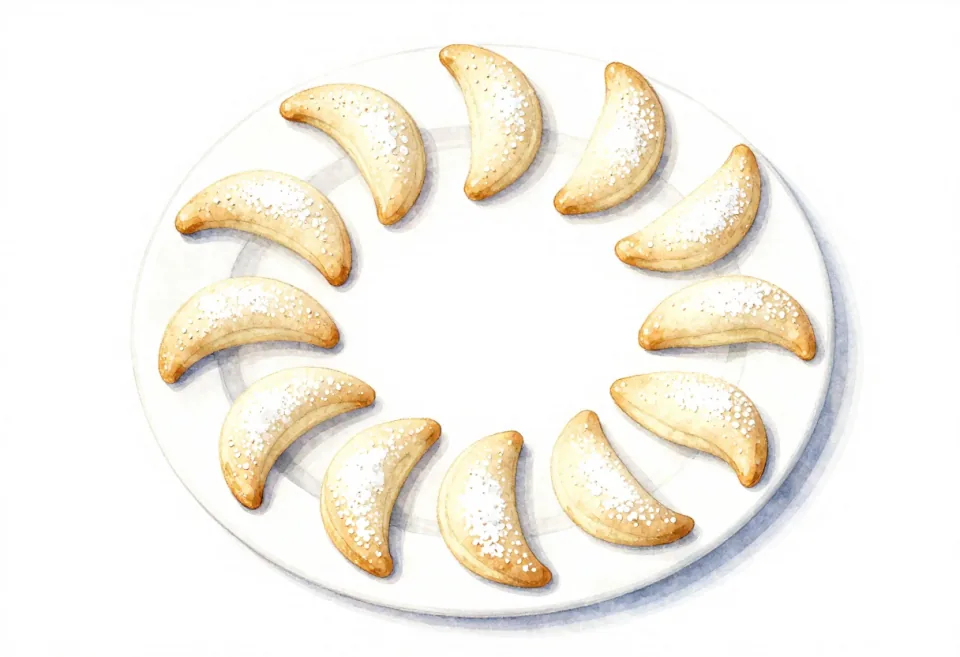
Vanillekipferl are tender Austrian crescent cookies made with ground almonds and rolled in vanilla sugar, shaped like the moon beneath Mary’s feet, for the Solemnity of the Immaculate Conception on December 8. This recipe makes about 50 small cookies; plan about 1½ hours, including chilling.
- Prep
- 40 min
- Cook
- 25 min
- Chill
- 30 min
- Total
- 1 hr 35 min
- Makes
- About 50 small cookies
- Level
- Medium
Adult supervision required. Grown-ups handle the oven, stovetop, knives, and anything hot.
Contains: wheat (gluten), milk, egg, tree nuts. Full allergy notes
Printable recipe card: US Letter PDF · A4 PDF
Why we make this for The Immaculate Conception
On December 8, the Church celebrates the Immaculate Conception. This feast is about Mary’s own beginning: from the first moment of her life, in the womb of her mother, St. Anne, God kept Mary free from original sin, the wound every child of Adam and Eve is born with, so that she could be the mother of Jesus. Pope Pius IX defined this as a dogma, a truth God has revealed that all Catholics believe, on December 8, 1854, in the bull Ineffabilis Deus. Four years later, at Lourdes in France, Mary told St. Bernadette, “I am the Immaculate Conception.”
Painters often show the Immaculate Conception as a young woman standing on a crescent moon, with stars around her head. The picture comes from Revelation 12:1: “a woman clothed with the sun, with the moon under her feet.” Mary under this title is the patroness of the United States, chosen by the American bishops in 1846, and December 8 is a holy day of obligation there.
Vanillekipferl (say “vah-NILL-uh-kip-ferl”) are little crescents of butter, flour, and ground almonds, rolled in vanilla sugar while still warm. They come from Austria, where December 8 is a national holiday, and they make a sweet moon for Mary’s feast.
The Immaculate Conception · December 8
Vanillekipferl for the Immaculate Conception
- Prep 40 min
- Cook 25 min
- Chill 30 min
- Total 1 hr 35 min
- Makes About 50 small cookies
- Level Medium
Adult supervision required
Cooking is for children and grown-ups together. An adult should supervise at all times and handle the oven, stovetop, knives, and anything hot. Hot baking sheets stay hot for several minutes, so a grown-up moves them, and children coat the cookies only once they are warm, not hot.
Allergy information
Contains wheat (gluten), milk, egg, and tree nuts (almonds or walnuts). Packaged vanilla sugar is usually just sugar with vanilla or vanillin, but check the label. Always read ingredient labels, since brands vary, and ask about food allergies before you cook or share.
Ingredients
Cookies
- 2 cups (250 g) all-purpose flour
- 1 cup (100 g) almond flour or finely ground walnuts
- ½ cup (60 g) powdered sugar
- ¼ tsp salt
- ¾ cup plus 2 tbsp (200 g) cold unsalted butter, cut into cubes
- 2 egg yolks
- 1 tsp vanilla extract, or the seeds of 1 vanilla bean
Vanilla sugar coating
- 1 cup (120 g) powdered sugar
- 1 packet (8 g) vanilla sugar, or the seeds of ½ vanilla bean
Method
- Whisk the flour, almond flour, powdered sugar, and salt in a large bowl. Add the butter and rub it in with your fingertips (or pulse in a food processor) until it looks like damp sand.
- Add the egg yolks and vanilla and knead briefly, just until the dough comes together. Shape it into two logs, wrap, and chill for 30 minutes.
- Heat the oven to 350°F (175°C) and line two baking sheets with parchment. Stir the coating sugars together in a shallow dish.
- Pinch off pieces about 2 teaspoons in size. Roll each into a rope about 2½ inches (6 cm) long, thinner at the ends, and bend it into a crescent. Set them 1 inch (2.5 cm) apart. Keep the second log in the fridge until you need it.
- Bake one sheet at a time for 11 to 13 minutes, until the cookies are set and pale with just-golden tips.
- Let the cookies rest on the sheet for 3 to 5 minutes, because they break easily while hot. While they are still warm, lift each one into the vanilla sugar, spoon sugar over it, and set it on a rack to cool.
Little helpers can (with a grown-up)
- Rub the butter into the flour with clean fingertips
- Roll the dough ropes and bend them into moons
- Stir the vanilla into the powdered sugar
- Give the cooled cookies a second snowfall of sugar
Good to know
- If the dough cracks as you shape it, warm it for a few seconds in your hands. If it gets sticky, put it back in the fridge for 10 minutes.
- Vanillekipferl keep for 3 weeks in an airtight tin, layered with parchment, and taste even better after a day or two.
A blessing before we eat
Bless us, O Lord, and these thy gifts, which we are about to receive from thy bounty, through Christ our Lord. Amen. O Mary, conceived without sin, pray for us who have recourse to thee.
Christian Goodnight · christiangoodnight.com/recipes/immaculate-conception-crescent-cookies · Bedtime stories for every feast in the free Woly app
Made it? Tell other families how it went.
Four quick taps, no typing. Your answers help other families choose what to make.
Questions families ask
Is the Immaculate Conception about Jesus being conceived?
No, this is a common mix-up. The Immaculate Conception means that Mary herself was kept free from original sin from the first moment of her life in her mother’s womb. Jesus’ conception by the Holy Spirit is celebrated at the Annunciation on March 25, nine months before Christmas.
Is the Immaculate Conception a holy day of obligation?
Yes, in the United States it is a holy day of obligation, so Catholics go to Mass that day, just as on a Sunday. In 2026 it falls on Tuesday, December 8. When December 8 falls on a Sunday, the feast moves to Monday, December 9.
Why is Mary shown standing on a crescent moon?
The image comes from Revelation 12:1, which describes “a woman clothed with the sun, with the moon under her feet.” The Church has long seen Mary in this woman, so artists paint the moon and stars in pictures of the Immaculate Conception.
What are Vanillekipferl?
They are small crescent-shaped butter cookies made with ground almonds, walnuts, or hazelnuts and rolled in vanilla sugar. They are among the best-loved Christmas cookies in Austria, Germany, and the Czech Republic, where they are called vanilkové rohlíčky.